


I Ching: The Book of Changes
· Nilya Store
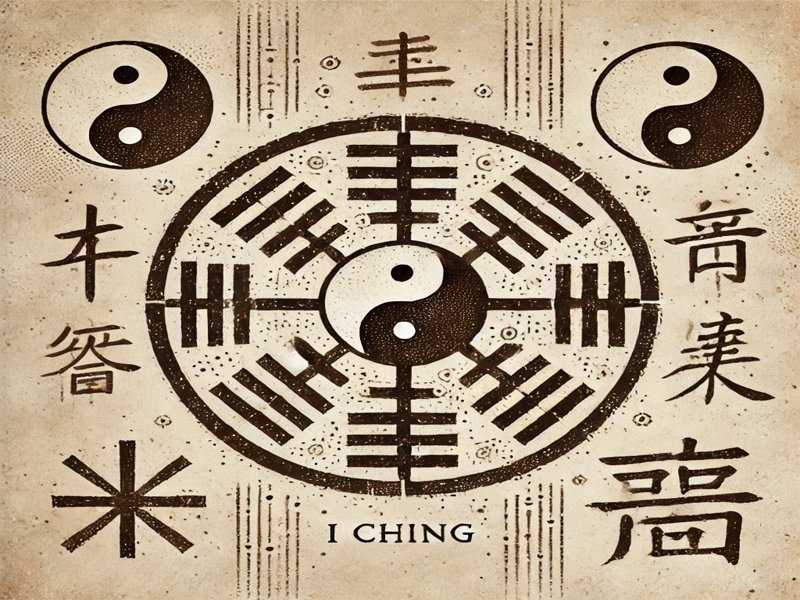
The I Ching, or Book of Changes, is one of the oldest systems of divination and philosophy in the world. Rooted in ancient Chinese thought, it has guided people toward more conscious decisions for thousands of years, both as a tool for glimpsing the future and as a source of everyday wisdom. Here's a look at where it came from and how it's still used today.
History of the I Ching
The roots of the I Ching stretch back to the early civilizations of China. The earliest known writings date to around 1000 BC, though scholars believe its core ideas go back even further, possibly to 3000 BC. Its foundations rest on yin and yang, the core principle of early Chinese philosophy.
The text developed further during the Zhou Dynasty, when it became known as the Book of Changes and certain life situations began to be expressed through symbols. Sixty-four of these symbols, each built from six lines, became known as hexagrams. Later, the philosophers Confucius and Laozi both drew on the I Ching, and it shifted from a purely predictive tool into more of a guide for living. Confucius treated it as a foundation for personal and social morality, while Daoists saw it as a way to understand balance in the world.
How the I Ching Is Used
At its center, the I Ching is a way of building a hexagram to help answer a question or work through a problem. There are two traditional methods for doing this.
The Yarrow Stick Method
This is the older and more time-consuming of the two. Dried stalks from the yarrow plant are divided and counted through a series of steps to build a hexagram line by line.
The Coin Toss Method
Here, a hexagram is built by tossing a coin six times, with heads and tails determining each line. Each resulting hexagram carries its own meaning, and interpreting it is how people arrive at their answer.
The I Ching's Influence on Everyday Life
Self-Guidance
The I Ching helps people think through complicated situations and make clearer, more grounded decisions on their own.
A Sense of Natural Balance
Built on the principles of yin and yang, it encourages people to notice the natural balances at work in their lives and adapt to them.
Spiritual Growth
As a meditation tool, the I Ching gives people a way to reflect, with each hexagram pointing to something worth paying attention to.
Notable I Ching Books and Sets
The I Ching, or Book of Changes (Wilhelm/Baynes Translation)
One of the most widely read translations, valued for combining historical depth with modern interpretation. It's a detailed, scholarly edition, though some beginners find it dense to start with.
The Complete I Ching, by Alfred Huang
Built around Taoist commentary, this edition favors a calmer, more approachable narrative that's easier for newcomers to follow, even if it offers less of an academic perspective.
I Ching Card Decks
Some editions present the I Ching's texts as a deck of cards rather than a book, which makes them easy to carry and consult, though they don't go as deep as a full traditional text.
Whichever version you start with, the I Ching offers a way to slow down and think more clearly about the questions in front of you. If you're curious about other divination traditions, take a look at our piece on the history of tarot cards.